Two questions get asked together here, and they have different answers. Hair oil can contribute to clogged follicles on the scalp and hairline. It does not cause dandruff.
Worth separating, because the fix is different for each.
What dandruff actually is
Dandruff is not dryness, and it is not dirt. It is generally understood to involve Malassezia, a yeast that lives on nearly everyone's skin. In some people it triggers an inflammatory response, skin cells turn over too quickly, and they shed in visible flakes.
Two features of dandruff worth knowing:
- The flakes are usually yellowish, oily and larger, and stick to the scalp or hair rather than falling freely
- It typically comes with itching, and often looks worse on an oily scalp, not a dry one
Dry scalp is the thing people confuse it with. Those flakes are small, white and powdery, the skin feels tight, and it usually improves with moisture and gentler washing.
Where oil comes into it
Here is the honest position. Malassezia feeds on lipids. Some heavier plant oils give it more of what it uses. That does not mean oil causes dandruff — the yeast is already there and the response is individual — but if you are prone to it, saturating your scalp with a rich oil and leaving it several days can make an existing condition more noticeable.
If you do not get dandruff, oiling your scalp will not give it to you.
Anyone dealing with persistent flaking, itching or scaling should see a doctor or dermatologist. Dandruff and seborrhoeic dermatitis have specific medical treatments, and cosmetic haircare is not one of them.
Clogged follicles are the more common issue
This one is straightforwardly mechanical, and much more likely than any dandruff interaction.
Oil left on the scalp mixes with sebum, dead skin cells and product residue. That combination can block a follicle opening, producing small bumps along the hairline, forehead, nape or upper back — the places where hair rests against skin.
It happens most when:
- Oil is applied at the roots rather than the lengths
- It stays on for days between washes
- The formula is heavy and occlusive
- Pillowcases are not washed often
How to use oil without either problem
Keep it below the ears. The ends of your hair are two or three years old and have been through everything. The scalp makes its own oil. Apply where the need is.
Do not exceed two applications between washes. The most reliable rule in all of this. Buildup is a ratio problem, not an oil problem.
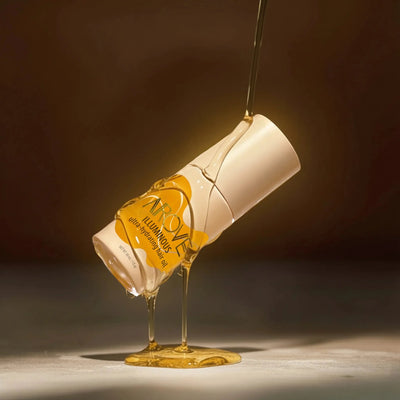
Use less of something lighter. A concentrated, lightweight formula leaves less material behind. Illuminous is a waterless concentrate — six or seven drops covers mid-lengths and ends, and it is silicone-free, so it does not need aggressive detergent to remove.
Wash properly. Oil on top of buildup is where trouble starts. A water-activated powder shampoo gives a genuine cleanse without the stripped feeling that leads people to postpone washing — which is what created the buildup in the first place.
Change your pillowcase weekly. Unglamorous and effective.
Telling the three apart
| Flakes | Scalp feel | Gets better with | |
|---|---|---|---|
| Dry scalp | Small, white, powdery | Tight | More moisture, gentler washing |
| Dandruff | Yellowish, oily, larger | Itchy, often oily | Medical treatment |
| Product buildup | Waxy, comes off in sheets | Coated | Clarifying wash |
If you are unsure which you have, that is a good reason to ask a professional rather than experiment.
Common questions
Should I stop oiling if I have dandruff?
Keep it off the scalp and use it on the lengths. Get the scalp itself looked at.
Does coconut oil make dandruff worse?
It is one of the heavier, more occlusive oils, so it is a reasonable one to avoid on the scalp if you are prone to flaking. On the ends it is a different question.
Can oiling overnight cause problems?
Only if it is on the scalp. Overnight on mid-lengths and ends is fine, on a pillowcase you are willing to wash.
Related: hair oil side effects and how often to apply it.